
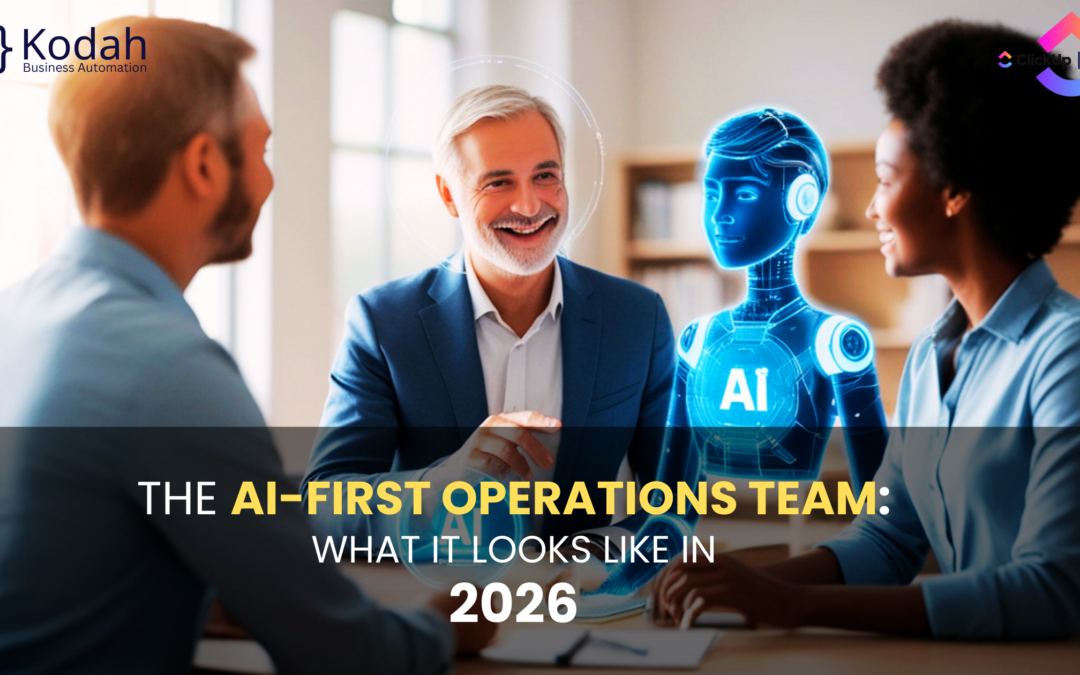
In 2026, an AI first operations team in South Africa does not resemble a futuristic control room. Instead, it is a lean, cross functional group whose daily work is strengthened by automation and machine intelligence across the entire workflow.
The single largest difference is the way we spend our time. Rather than spending time sending and receiving emails, keeping spreadsheets updated, and attempting to make sense of the numbers, the operations team is able to focus on decisions, exceptions, and improvements. The workflow for tasks such as routing, validation, notification, and reconciliation is well-governed.
The AI is often used as the first pass for many of the tasks. The AI helps in the triage, determining the course of the next action, and even the writing of the communication and highlighting the issues for the human decision-maker.
Cleaner Operational Data
The data that AI first teams use is clean and reliable.
Rather than considering data capture an administrative process, the systems are designed to ensure that the data is created once and used multiple times. This allows the information to flow between CRM systems, ticketing systems, work management systems, finance systems, and compliance systems without the need to re-enter the data manually.
The operational data is incredibly valuable. Using this data, the models can detect risk, predict demand, or even detect capacity issues. This allows the leaders to get an early warning when service levels are at risk or when the teams are getting close to operational capacity.
Playbooks Built Into Daily Work
Within an AI First environment, playbooks are not documents kept in folders.
Within AI First, playbooks are embedded as templates, workflows, and automations directly into the tools teams are already using. So, when a particular scenario is happening, such as onboarding, approvals, claims, collections, or fulfillment, the correct workflow is generated for you.
Context Driven Workflows
AI can help determine which playbook to activate by analysing context such as:
- Customer tier
- Product type
- Geographic region
- Regulatory requirements
People still make the final decisions, but they start from a structured recommendation rather than a blank page.
Hybrid Skills Across the Team
AI first operations teams are designed around hybrid skills.
Traditional operations leadership, coordination, and analysis roles still exist, but employees are now automation-savvy. They are comfortable making workflow changes, improving prompts, and understanding the insights generated by the AI.
There is usually a clear distinction between the engineering/data side of the organization and the business operations side of the organization. However, they now collaborate on the shared automation roadmap rather than competing for control of the systems and the processes.
Governance and Responsible AI
Governance is vital in an AI first organisation.
Adoption of AI is not about going for automation everywhere, but it is about establishing rules on where AI should be used independently, where it should be used to support humans, and where human judgment should always be required.
Key governance elements
- Transparent audit trails for automated decisions
- Clear explanations of how AI outputs are generated
- Ethical guidelines for data use and model behaviour
- Strict oversight in regulated sectors such as banking, insurance and healthcare
These safeguards ensure automation improves operations without introducing unacceptable risk.
A New Level of Operational Leverage
The first AI for first operations team is not about replacing people.
It is about giving African operations teams the leverage they have historically lacked. With the right automation, a small and skilled team can safely manage a far larger and more complex organization, with quality, control, and resiliency.