
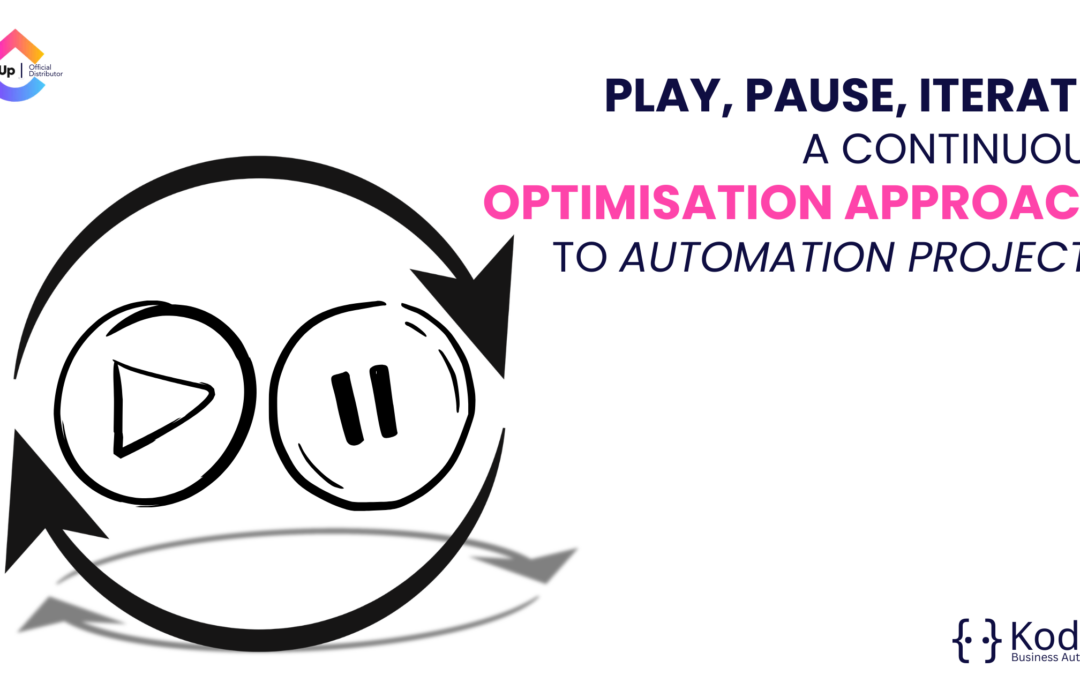
Automation delivers the best results when it is treated as a product that evolves over time rather than a one-off project that is built, launched, and forgotten.
Play: Ship the Smallest Valuable Version
The Play phase concentrates on getting a workflow into production as quickly as possible. The idea here is not to build the perfect workflow to begin with but to deploy a tiny level of automation that actually adds value.
This may involve automating emails, forms, or approvals. The key here is to build the smallest workflow to begin with that adds value or reduces errors.
It is important to determine what success looks like and to set guardrails at this stage. It is important to launch to a small group to begin with to be able to test in a real environment without impacting the entire organization.
Pause: Observe, Measure and Listen
This is the part where learning takes place, and it is known as the Pause phase.
At this point, teams should look at the data, both qualitative and quantitative, and analyze it. The data, such as cycle time, error rate, SLA, and task volume, can provide a better understanding of how the workflow is doing. At the same time, feedback from the people working with the workflow can provide valuable information that cannot be seen in the data.
This is where teams look for where people are working around the workflow, where there are workarounds, and where there is confusion in the workflow.
Iterate: Improve with Focused Changes
Within the Iterate phase, changes are made by fine-tuning particular parts of the workflow.
Rather than redesigning the whole workflow, particular parts of it can be fine-tuned. This could include fine-tuning triggers and conditions, making forms more simple, fine-tuning assignment rules, or improving notifications that can create a lot of “noise.”
Each change should be small enough to be released frequently and measured effectively. Over time, these fine-tuned changes add up, creating an automation that more closely resembles how the organisation really works.
Building a Continuous Optimisation Culture
Play, Pause, Iterate is most effective when it is embedded into day-to-day processes.
Organisations can implement regular processes such as monthly or quarterly automation review cycles to measure and receive feedback on automation performance. Keeping a list of suggestions or ideas visible can also ensure that automation is grounded in real-world operational needs.
When automation is thought of as a dynamic system, organisations can avoid a common pitfall of large-scale projects that become out of date almost immediately. Instead, they can create a dynamic automation layer that can change and adapt as teams, customers, and businesses change.